Do I Have a Right? | 2026 Formal Game Winner
And the GEE Award Goes To… Do I Have a Right?
The Formal Learning category is always a joy to review! We had three finalists, all with real classroom reach and genuinely thoughtful design. We are pleased to announce the winner is iCivics' Do I Have a Right?
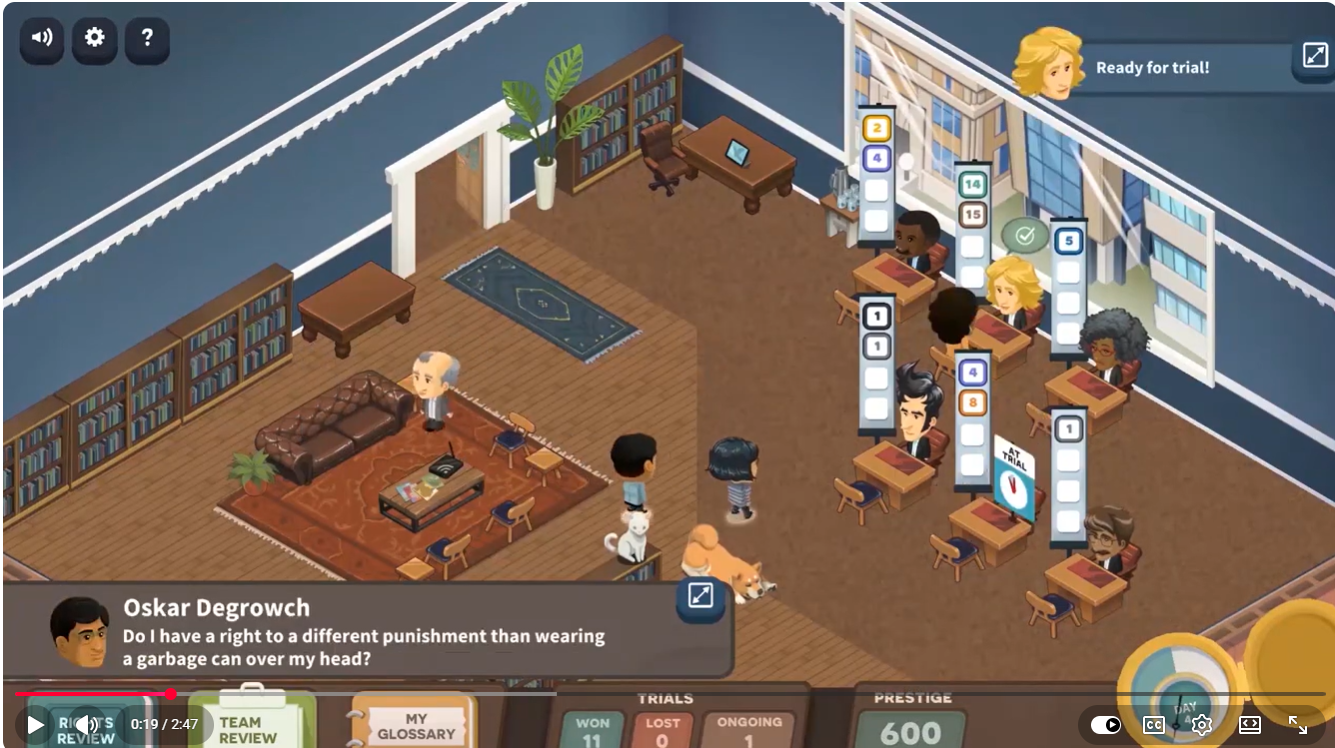
In the game, you run a law firm that specializes in constitutional law. Clients show up with complaints, and it's on you to decide whether they actually "have a right," match them with the attorney who specializes in the correct amendment, and win the case in court. The more matches you make, the more the firm grows. You hire attorneys, expand their skills, and upgrade the office, all while racing to keep clients from storming out. What the judges loved is how much the fun depends on actually knowing the material. One judge wrote: "Really outstanding game on a multitude of important topics. I was particularly pleased with all of the red herrings thrown in about things that aren't rights. I could definitely see classroom discussions stemming from this." Another praised how far the studio has come with the visuals and interface: "They are better and better each year with UI and the visual part." Congratulations to the whole iCivics team!
The other two finalists
Both of the other games were also exciting to play.
Credit Climber (Filament Games & Intuit) takes on financial literacy by putting you in the role of a mentor guiding a friend through everyday money decisions. Every choice ripples out to affect their credit score and long-term goals. One judge called it a "rare case when I play an edgame and forget it's an education game," adding that "the visual and choices make you sweat." Another appreciated the philosophy underneath it: "I like the design philosophy that bad choices are recoverable and that the NPC has real agency." It also reached an enormous audience, with around 150,000 students playing through Intuit's Hour of Finance Challenge.
Fantasy Sports Math League (dfusion) builds the math right into the game. Students draft NFL fantasy teams, analyze weekly stats, and calculate scores using fractions and order of operations, so every point on the leaderboard is earned through computation. One judge loved "the use of real-world data and stats to power this," and another called it "such a brilliant idea for a game." It's one we're excited to keep an eye on as more of its features come online.
Congratulations to all three teams, and thank you for building games that take both play and learning seriously.